At first glance, Prime Minister Narendra Modi’s recent public appeal may have sounded like a simple call for responsible living.
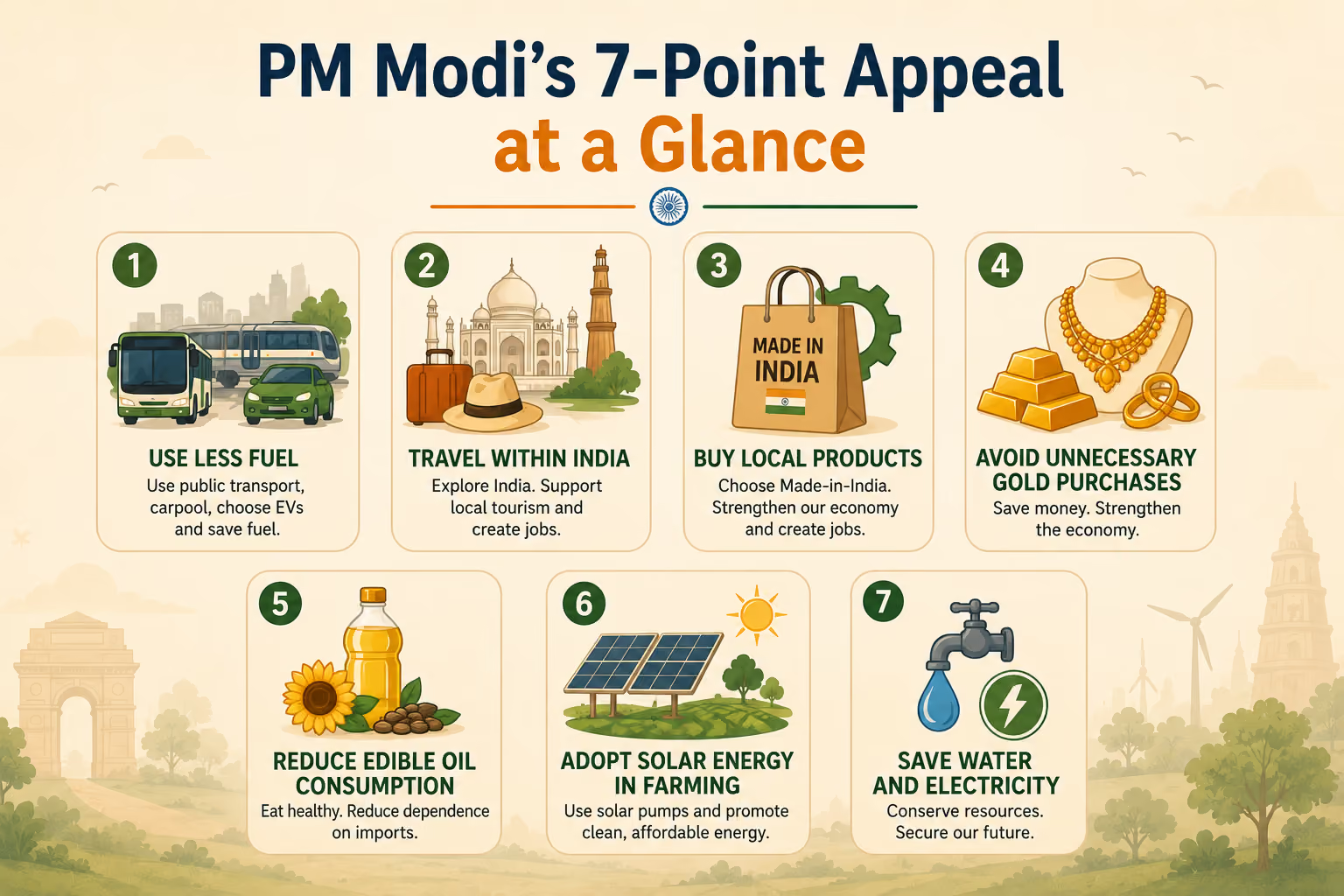
Use less fuel. Travel within India. Avoid unnecessary imports. Save water and electricity. Buy local products. Reduce edible oil consumption. Avoid unnecessary gold purchases.
But beneath the surface, the message carried something larger.
This was not merely a sustainability campaign. It was also an economic signalling exercise during a period of rising global uncertainty.
With geopolitical tensions intensifying globally, crude oil prices remaining volatile, supply chains becoming fragmented again, and countries increasingly prioritising economic self-reliance, the government appears to be preparing citizens psychologically for a world that may remain unstable for longer than expected.
The message was subtle. But strategic.
And importantly, it reflects how modern governments increasingly see citizen behaviour as part of economic policy itself.
Continue Reading
⚡ Summarise & Show My Investment Playbook
1. Fuel & EVs
Ditch the Pump, Ride the Wave
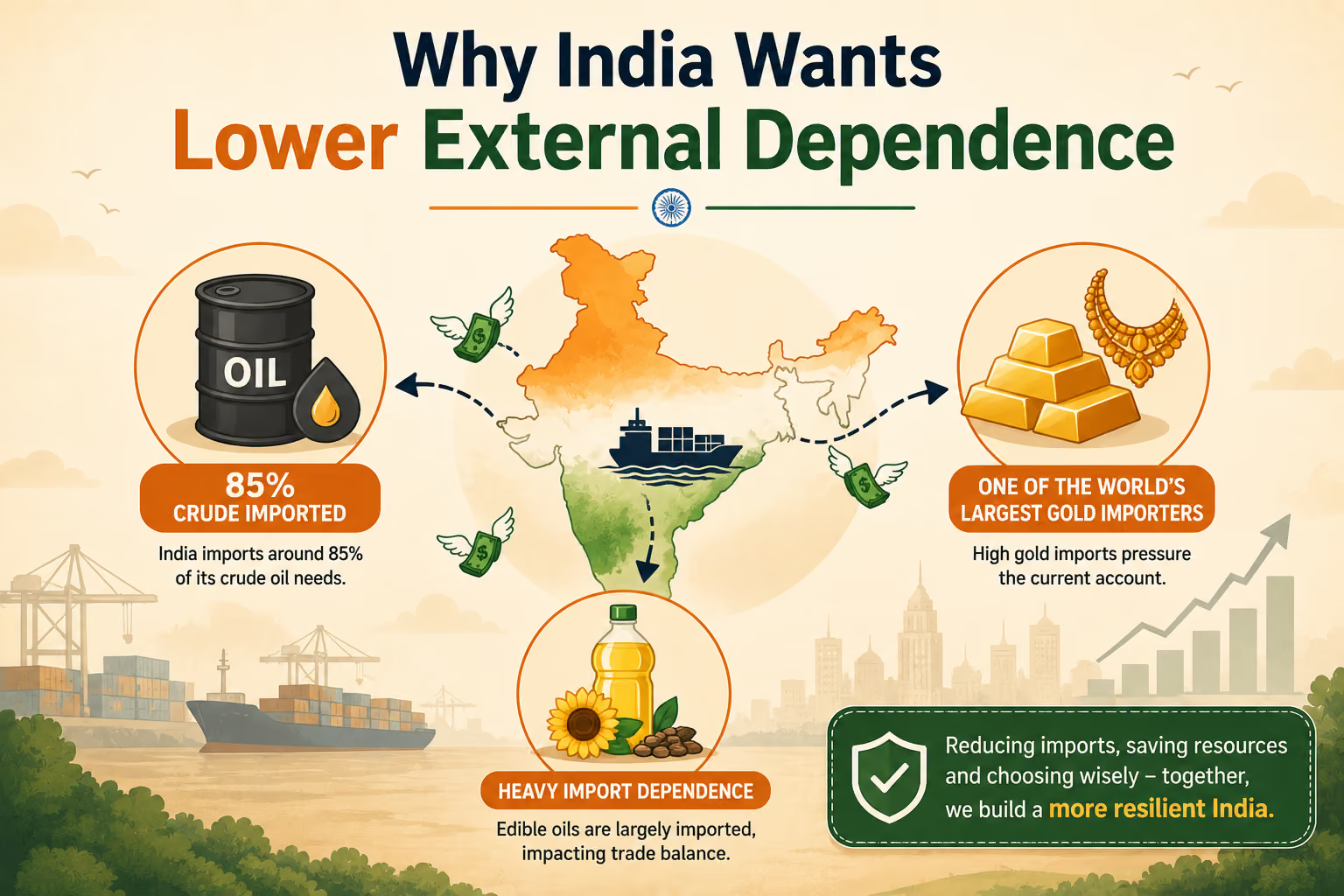
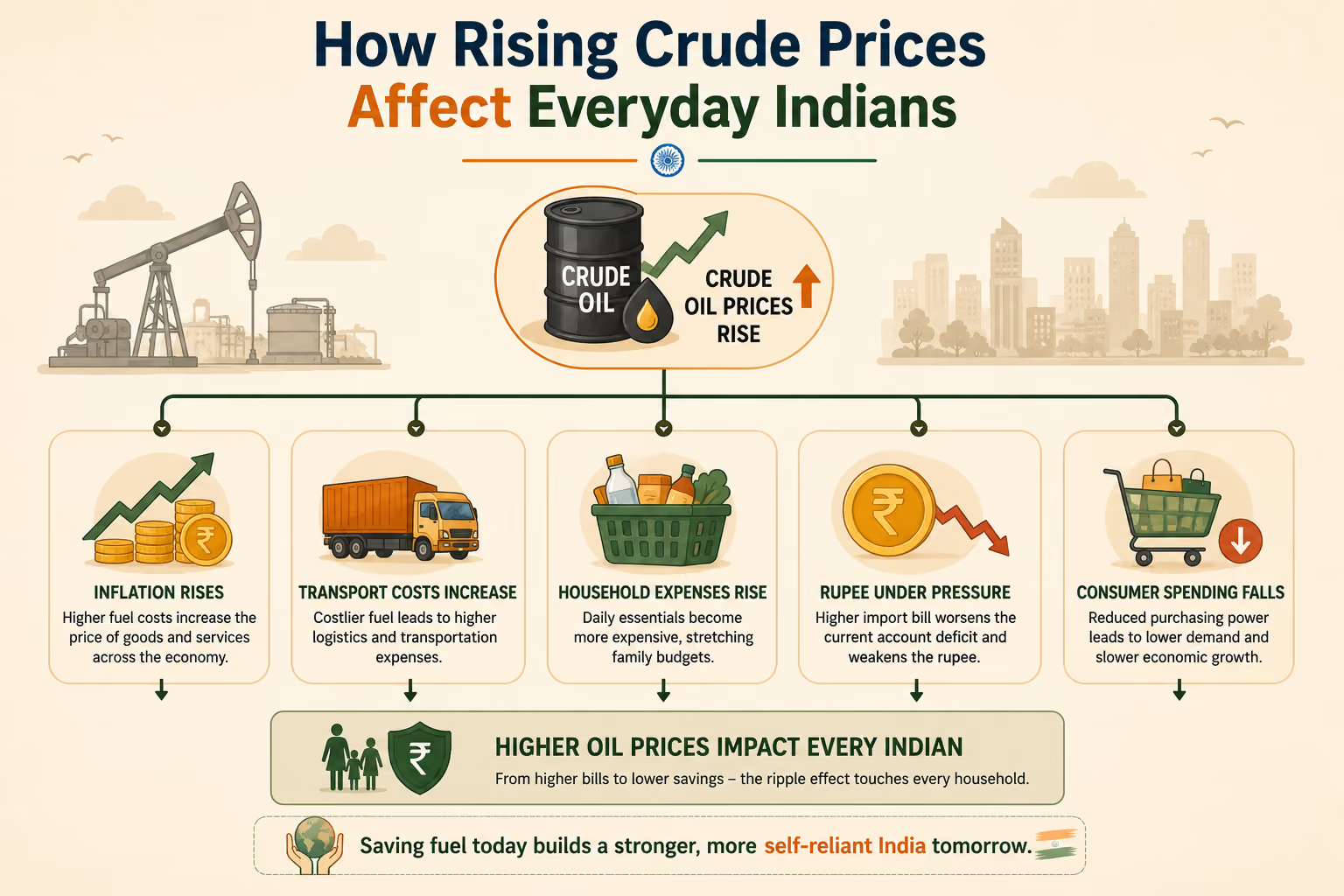
85% of India's crude is imported. Shifting to public transport or EVs shields your wallet from sudden inflation shocks and helps protect macro currency valuation.
2. Local Tourism
Explore Locally, Compound Internally
Destination weddings and overseas vacations drain foreign exchange. Diverting that luxury capital into rising Indian tourist hubs boosts domestic hospitality equities.
3. Made In India
Back Quality Domestic Brands
The "Buy Local" push scales up manufacturing MSMEs. Look out for high-quality, competitive Indian consumer goods and manufacturing companies poised to gain structural market share.
4. Gold Import Pressures
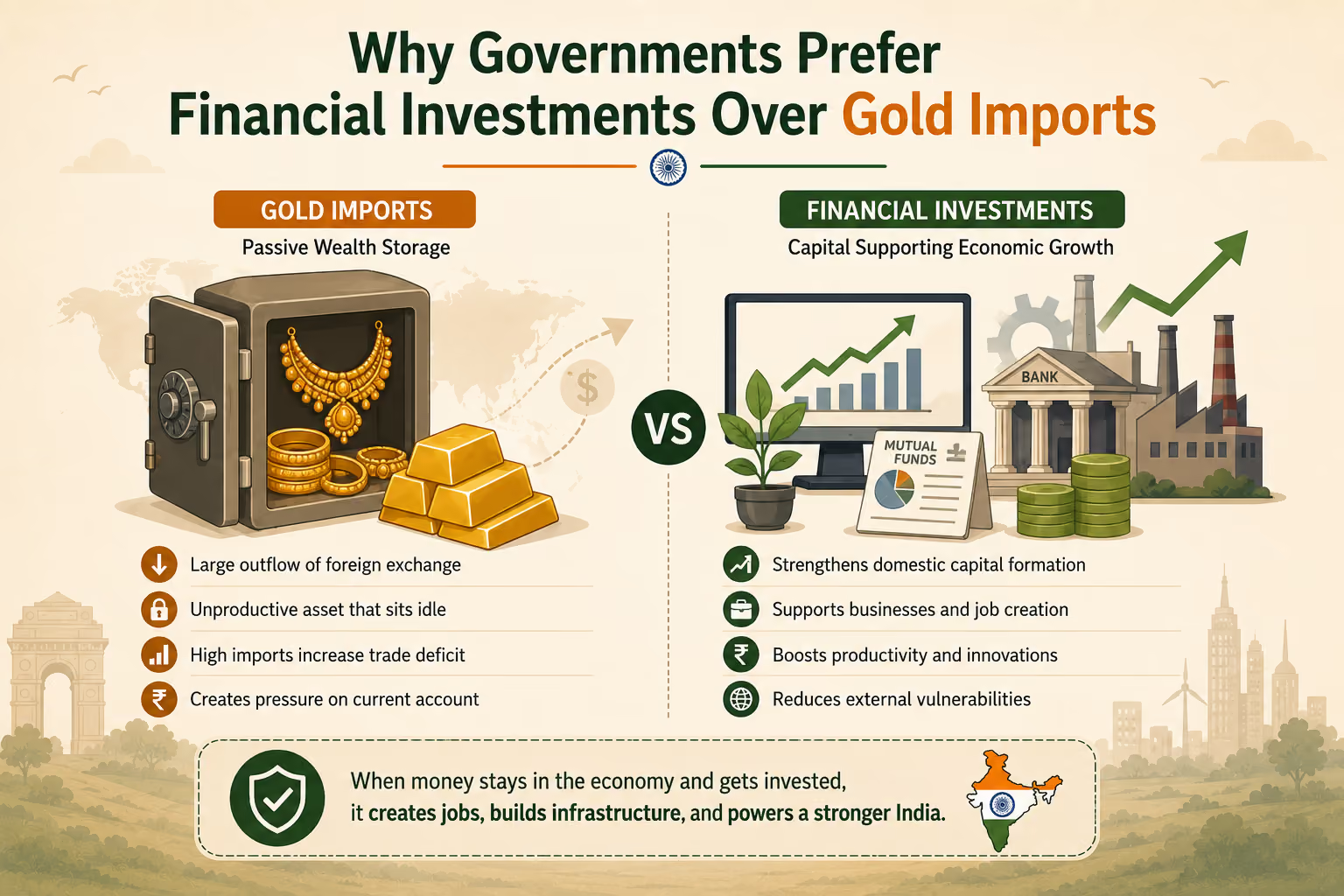
Financialise Your Gold Assets
Excessive physical gold ties up household wealth into dead, non-productive capital. Swap physical gold for digital financial instruments to deploy that cash back into active growth assets.
5. Consumption Edits
Edible Oil & Health Ecosystems
India is vulnerable to global commodity price swings in edible oil imports. Choosing moderation is a dual signal favoring public health savings and lower macro import burdens.
6. Rural Green Energy
Solarise Agricultural Operations
Moving farmers away from costly chemical fertilizers and grid reliance toward solar pump ecosystems drastically reduces central government subsidy outlays.
7. Climate & Water
Resource Prudence Wins Long Term
Water scarcity and power outages are structural portfolio risks. Conserving vital utility resources reduces the overarching operational risk parameters for India's urban engines.
8. Strategic Takeaway
The Ultimate Structural Shift
The Verdict: Lifestyle habits are morphing into macroeconomic defensive choices. Capitalizing on this requires moving away from stagnant assets toward dynamic, domestic market-driven funds.
🎯 Your Actionable Investment Playbook
National economic prudence signals a major structural shift. Align your long-term allocations with emerging Indian manufacturing, alternative energy, and financialization growth engines.
and inefficient irrigation continues challenging agriculture sustainability.
Solar pumps reduce long-term energy dependence while improving farm resilience.
Potential Benefits
Lower subsidy burden
Sustainable farming practices
Reduced groundwater stress
Cleaner rural energy adoption
Potential Pitfalls
The transition cost remains substantial.
Small farmers may struggle with:
upfront investment costs,
financing access,
and technological adoption barriers.
Without sufficient policy support, adoption could remain uneven.
7. Water Conservation and Sustainable Living
The Prime Minister linked many of these actions to Mission LiFE — the government’s sustainability movement encouraging environmentally conscious lifestyles.
This included:
saving electricity,
conserving water,
avoiding single-use plastics,
and practising mindful consumption.
Why This Matters
Climate stress is no longer theoretical for India.
Heatwaves, water scarcity, unpredictable monsoons, and urban resource pressure are becoming structural concerns.
The government increasingly recognises that sustainability cannot rely only on policy. It requires behavioural participation.
Potential Benefits
Lower environmental stress
Greater long-term sustainability
Improved urban resource management
Stronger climate resilience
Potential Pitfalls
The challenge lies in consistency.
Behavioural sustainability campaigns often lose momentum unless reinforced continuously through:
incentives,
infrastructure,
regulation,
and education.
Citizens also expect governments and corporations to share responsibility equally — not shift the entire burden onto individuals.
The Bigger Strategic Message
What makes this 7-point appeal important is not any individual suggestion.
It is the broader philosophy underneath it.
The government appears to be signalling three things simultaneously:
1. India Must Prepare for a More Uncertain Global Order
Energy shocks, supply disruptions, and geopolitical fragmentation may remain persistent features of the coming decade.
2. Economic Security Is No Longer Separate from Lifestyle Choices
What citizens consume now increasingly affects national resilience.
3. Self-Reliance Is Being Expanded Beyond Manufacturing
The idea now extends into:
energy,
agriculture,
consumption,
sustainability,
and behavioural economics.
Final Analysis: Pragmatic Strategy or Behavioural Signalling?
In reality, it is probably both.
Some of these recommendations are economically rational and environmentally necessary.
Others function more as behavioural nudges designed to psychologically align citizens with the larger “Viksit Bharat” vision.
And that itself is politically significant.
Modern governments increasingly rely not just on policy reforms, but on shaping public behaviour collectively.
The success of this approach, however, depends on one key factor:
Citizens are more likely to embrace sacrifice when they believe:
the burden is shared fairly,
institutions are efficient,
and long-term benefits are tangible.
Because ultimately, responsible consumption cannot be sustained through messaging alone.
It requires trust, infrastructure, incentives, and visible outcomes.
Barun is an experienced wealth management professional with over 13 years of expertise in guiding individuals and institutions on their investment journeys. He possesses a deep understanding of financial markets, encompassing a wide range of products, including mutual funds, stock advisory, complex structured products, forex, bonds, and corporate NCDs. He is NISM VA and XXI A certified, as well as IRDAI certified for insurance.
Schedule a call based on your convenience. And get an expert to help you invest.
on stock picking, poring over excel sheets, financial news, analyzing market trends, tracking the Sensex, researching company fundamentals, comparing mutual funds, reading financial reports, trying to predict the future & losing your sanity!
Thanks For Subscribing!
We'll send you interesting emails about exciting investment options.
Oops! Something went wrong while submitting the form.
Upload your mutual fund statement for tailored recommendations and a comprehensive portfolio review.
Upload Your Consolidated Account Statement from CAMS
We'll email your personalised mutual fund review in a few days—our experts, who have 40+ years of experience, go beyond quick algorithms to deliver deep, customised insights.
To get recommendations aligned with your goals, fill out your risk profile here.
For any questions, feel free to reach us at wealth@bankoncube.com
How to Download Your Consolidated Account Statement (CAS)


.png)