The Nifty is making new highs. News tickers are celebrating a historic bull run. Yet when you open your portfolio, your mutual fund returns look flat—or worse, negative.
If you’re wondering why your mutual fund is not giving returns even though the market is up, you’re not alone. This is one of the most common and misunderstood problems faced by Indian investors, especially in Tier-1 cities where expectations are shaped by headline indices like the Sensex and Nifty.
The disconnect between market up but portfolio down often leads to impulsive decisions—panic exits, fund switching, or stopping SIPs—actions that quietly damage long-term wealth.
Before reacting, it’s important to understand what’s actually causing the gap, and more importantly, how to fix it without derailing your goals.
If you want a professional, unbiased diagnosis, you can Speak to a Cube Wealth Coach for a structured portfolio review, and a personalised Risk vs Goal Analysis.
Why Isn’t My Portfolio Rising When the Market Is Up?
Short answer: because the “market” is not one thing.
Headline indices like the Nifty 50 are often driven by a narrow set of large stocks. Your portfolio, however, may be spread across mid-caps, small-caps, hybrid funds, or defensive sectors that haven’t participated in the rally yet.
This leads to the familiar frustration: market up but portfolio down.
Before concluding that your funds are broken, ask:
Are my funds aligned with the part of the market that’s rallying?
Am I comparing performance to the right benchmark?
This is where a Risk vs Goal Analysis becomes critical. A portfolio built for stability will always lag a momentum-driven rally—and that is not necessarily a flaw.
Understanding the Behaviour Gap (The Real Culprit)
In India, this gap is one of the biggest reasons why MF returns are low despite strong markets.
1. Entry-Timing Mistakes
Many investors buy funds after a category has already run up sharply. When returns normalise, it feels like underperformance—even though it’s just a cooling-off phase.
2. Fund-Category Mismatch
If large-cap stocks are leading the rally but your portfolio is tilted heavily toward small-caps or hybrids, returns will naturally lag the index.
3. Portfolio Churn & Impatience
Constant switching—from last quarter’s laggard to this quarter’s star—is a classic reason mutual fund returns lag index. This behaviour locks in losses and disrupts compounding.
If you’ve been frequently switching funds without results, this is a powerful signal to pause and reassess.
When Is Underperformance Normal—and When Is It a Red Flag?
Short-Term Underperformance (Normal)
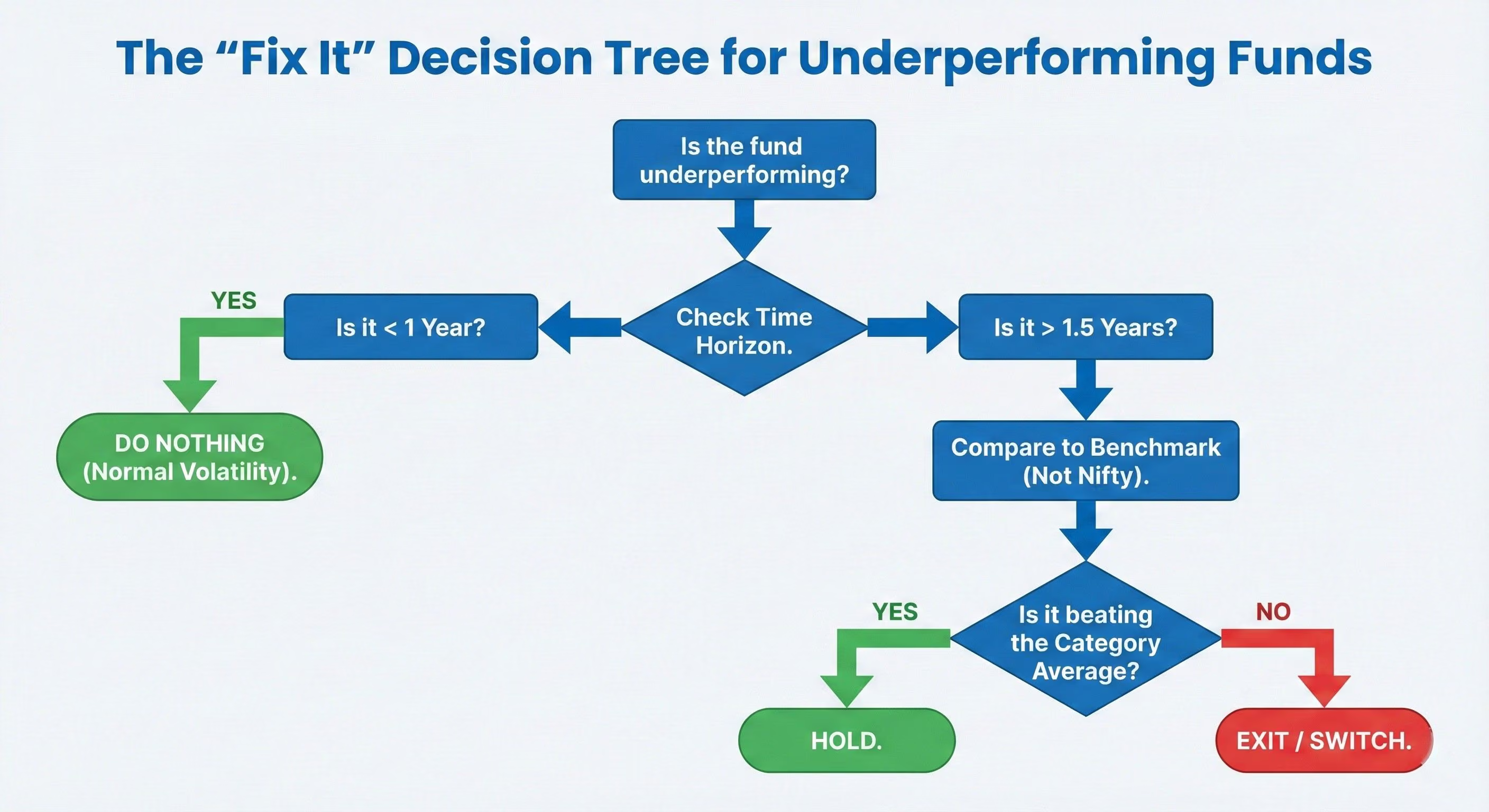
A fund lagging for 3–6 months is usually just market noise. Acting on this often does more harm than good.
Long-Term Underperformance (Concerning)
If a mutual fund is not giving returns over 12–18 months and consistently trails:
Its benchmark index, and
Category peers
…it may be a structurally underperforming mutual fund.
Benchmark Misunderstanding (Very Common)
Comparing a conservative hybrid fund to the Nifty 50 is misleading. Always evaluate performance against the fund’s official benchmark (e.g., Nifty Midcap 150, CRISIL Hybrid Index).
How to Fix an Underperforming Mutual Fund Portfolio
If your mutual fund returns are low, don’t panic-sell. Follow this structured approach:
1. Asset Allocation Reset
Overconcentration in one category is the #1 reason portfolios lag. Ensure exposure across:
Exit funds that remain in the bottom quartile of their category for 4 consecutive quarters, without a clear justification.
What Not to Do When Markets Are Rising
Don’t chase star ratings: Look at rolling returns, not snapshots
Don’t stop SIPs: Flat periods are when future gains are built
Don’t ignore costs: Regular plans and high expense ratios quietly shave off returns every year
These mistakes widen the behaviour gap and delay recovery.
Final Take: Fix the Process, Not the Panic
If your portfolio isn’t matching market headlines, the problem is rarely “bad funds” alone. It’s usually a mix of expectations, category mismatch, and behavioural errors.
History shows that disciplined investors who:
Stick to asset allocation
Avoid unnecessary churn
Align investments with goals
…eventually see returns catch up—even after long flat phases.
If you want clarity on what exactly is holding your portfolio back, a Portfolio Health Check or MF Audit can identify the gaps objectively.
Ready to stop guessing and start fixing? Speak to a Cube Wealth Coach for a personalized Risk vs Goal Analysis and a clear action plan.
1. Why is my mutual fund not giving returns when the market is up?
This usually happens due to sector divergence, fund-category mismatch, poor entry timing, or frequent portfolio churn—rather than a problem with the overall market.
2. How long should I wait before exiting an underperforming mutual fund?
Track the fund against its benchmark for 12–18 months before exiting, unless there is a major strategy or risk-profile change.
3. What is the behaviour gap in mutual fund investing?
The behaviour gap is the difference between a fund’s actual returns and what investors earn because of poor timing, emotional decisions, and frequent switching.
4. What does “market up but portfolio down” really mean?
It means the rally is narrow or sector-specific, while your funds are invested in areas that haven’t participated yet.
5. Is short-term underperformance normal in mutual funds?
Yes. Underperformance for 3–6 months is common and usually not a cause for concern.
6. How do I check if my mutual fund is truly underperforming?
Compare rolling returns and alpha against the fund’s benchmark over 12–18 months, not against the Nifty or Sensex blindly.
7. Does frequent fund switching hurt returns?
Yes. Switching often leads to buying high and selling low, widening the behaviour gap.
8. Why do expense ratios matter when markets are rising?
High costs quietly reduce returns every year, making underperformance more visible during strong market phases.
9. Should I stop my SIP if my fund isn’t performing?
No. Continuing SIPs during flat periods helps accumulate units that drive long-term gains.
10. What is the best way to fix low mutual fund returns?
Conduct a Risk vs Goal Analysis, rebalance asset allocation, and remove consistently underperforming funds.
Barun is an experienced wealth management professional with over 13 years of expertise in guiding individuals and institutions on their investment journeys. He possesses a deep understanding of financial markets, encompassing a wide range of products, including mutual funds, stock advisory, complex structured products, forex, bonds, and corporate NCDs. He is NISM VA and XXI A certified, as well as IRDAI certified for insurance.
Schedule a call based on your convenience. And get an expert to help you invest.
on stock picking, poring over excel sheets, financial news, analyzing market trends, tracking the Sensex, researching company fundamentals, comparing mutual funds, reading financial reports, trying to predict the future & losing your sanity!
Thanks For Subscribing!
We'll send you interesting emails about exciting investment options.
Oops! Something went wrong while submitting the form.
Upload your mutual fund statement for tailored recommendations and a comprehensive portfolio review.
Upload Your Consolidated Account Statement from CAMS
We'll email your personalised mutual fund review in a few days—our experts, who have 40+ years of experience, go beyond quick algorithms to deliver deep, customised insights.
To get recommendations aligned with your goals, fill out your risk profile here.
For any questions, feel free to reach us at wealth@bankoncube.com
How to Download Your Consolidated Account Statement (CAS)


.png)