August 11, 2025
Building Stability: A Professional's Guide to Best Bonds India 2025
Read more

At first glance, Prime Minister Narendra Modi’s recent public appeal may have sounded like a simple call for responsible living.
Use less fuel.
Travel within India.
Avoid unnecessary imports.
Save water and electricity.
Buy local products.
Reduce edible oil consumption.
Avoid unnecessary gold purchases.
But beneath the surface, the message carried something larger.
This was not merely a sustainability campaign. It was also an economic signalling exercise during a period of rising global uncertainty.
With geopolitical tensions intensifying globally, crude oil prices remaining volatile, supply chains becoming fragmented again, and countries increasingly prioritising economic self-reliance, the government appears to be preparing citizens psychologically for a world that may remain unstable for longer than expected.
The message was subtle. But strategic.
And importantly, it reflects how modern governments increasingly see citizen behaviour as part of economic policy itself.
Timing matters.
India today sits at a complicated intersection:
In such an environment, even small changes in consumer behaviour can have macroeconomic implications.
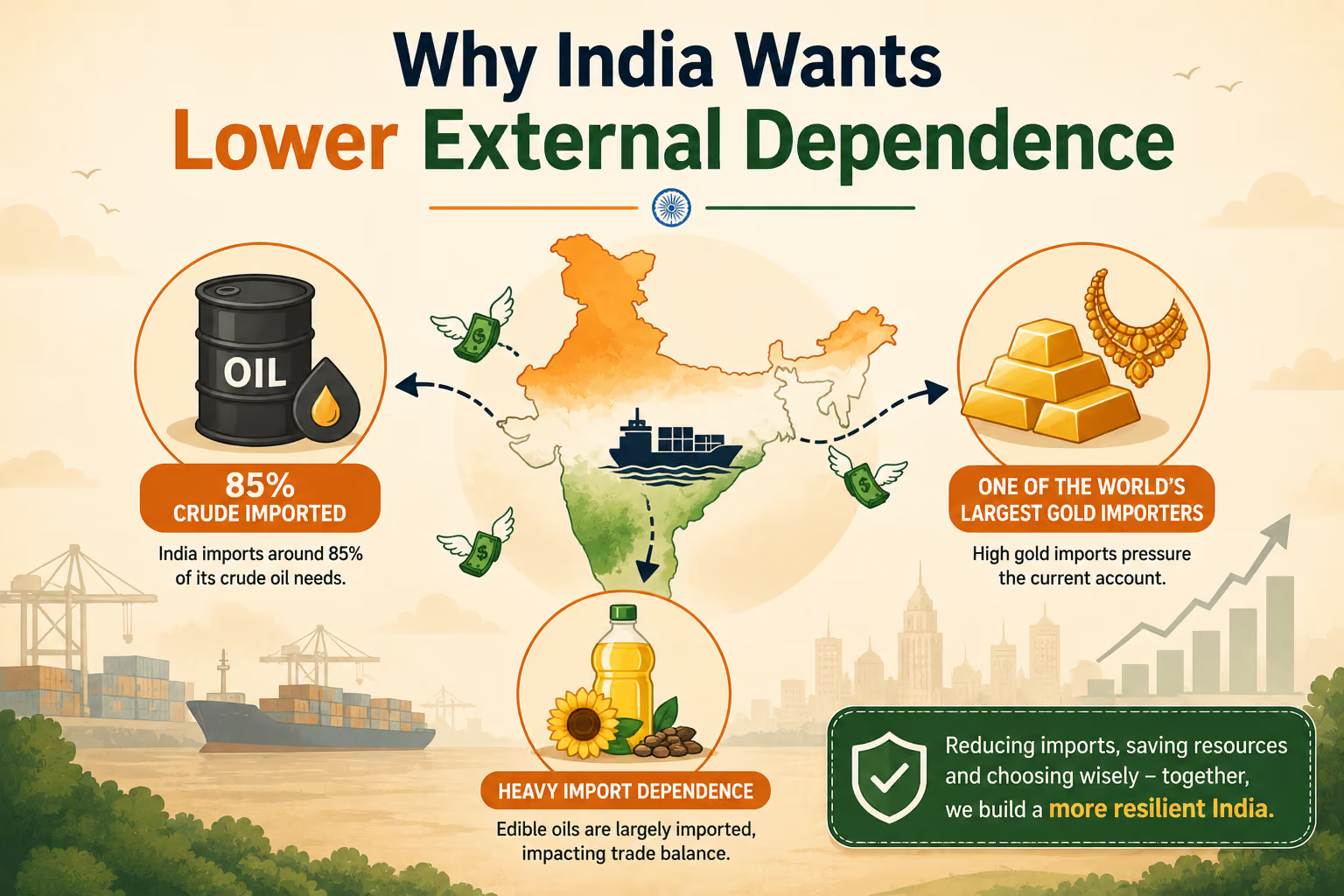
For example:
So while the messaging sounded behavioural, the underlying concern was economic resilience.
The broader theme was clear:
India must become less externally vulnerable.
One of the strongest points in the Prime Minister’s appeal was reducing dependence on petrol and diesel.
This includes:
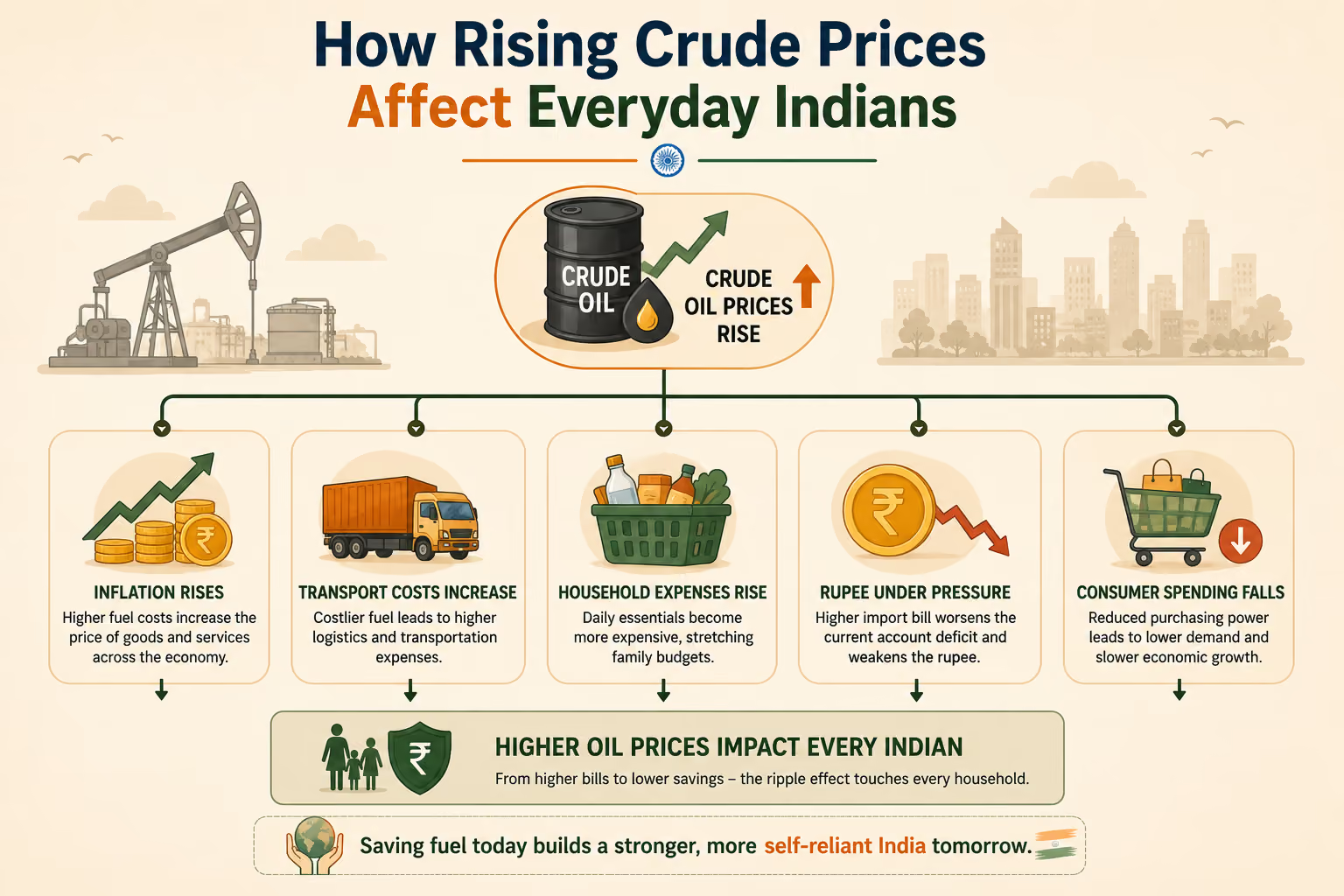
India imports nearly 85% of its crude oil requirements.
That means every major global oil spike directly impacts:
Even a moderate rise in crude prices can ripple across the economy:
By reducing fuel consumption collectively, India can theoretically reduce pressure on imports and energy demand.
The challenge, however, lies in infrastructure realities.
Public transport quality remains inconsistent across Indian cities. EV adoption is still constrained by:
Similarly, work-from-home may reduce fuel usage, but it also impacts sectors dependent on office-driven consumption:
So while the direction is logical, execution complexity remains high.
The Prime Minister also urged Indians to prioritise domestic tourism over foreign holidays and destination weddings.
This aligns strongly with the government’s broader localisation and self-reliance narrative.
When affluent Indians spend heavily abroad:
India’s domestic tourism economy supports:
Redirecting even a portion of outbound discretionary spending internally could significantly benefit local economies.
The risk is that “discouraging foreign travel” can be interpreted too broadly.
Global exposure also matters economically and culturally. International travel:
India must avoid slipping into economic inwardness under the guise of self-reliance.
There is a fine balance between promoting domestic spending and appearing protectionist.
The “buy local” message has been central to the government’s economic philosophy since the Atmanirbhar Bharat push.
The logic is straightforward:
If Indians increasingly support domestic manufacturing, local industries scale faster.
India has long struggled with:
Encouraging local consumption can:
This becomes especially important during periods of global supply disruption.
But “buy local” campaigns only work sustainably if Indian products remain competitive in:
Consumers cannot be expected to permanently sacrifice quality for patriotism.
Protection without competitiveness can reduce innovation incentives over time.
This was perhaps one of the most economically significant points in the Prime Minister’s appeal.
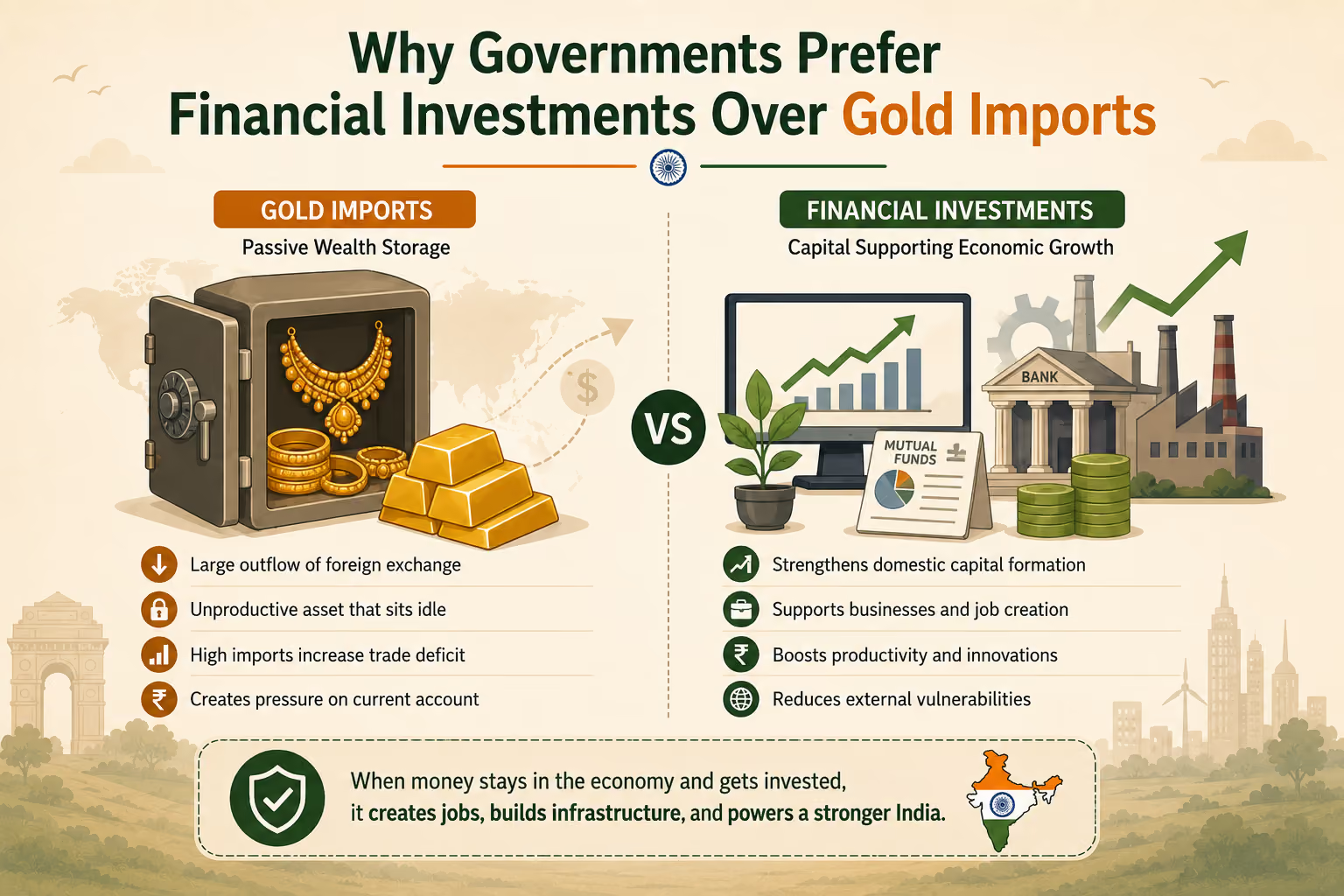
India is among the world’s largest gold importers.
Culturally, gold remains deeply embedded in Indian savings behaviour. Especially during uncertainty.
Large gold imports:
From the government’s perspective, excessive gold buying also locks household savings into non-productive assets rather than financial investments.
The issue is behavioural trust.
Many Indians buy gold because they:
Without deeper financial literacy and wealth creation alternatives, reducing gold demand structurally may remain difficult.
India imports a substantial portion of its edible oil requirements.
Reducing consumption is both:
Edible oil imports contribute significantly to import bills, especially during global commodity spikes.
Encouraging moderation:
Behavioral change at population scale is extremely difficult.
Food habits are cultural, emotional, and regional. Messaging alone rarely changes consumption patterns sustainably without broader ecosystem support.
The Prime Minister also encouraged:
India’s fertiliser subsidy burden remains enormous.
Meanwhile:
Solar pumps reduce long-term energy dependence while improving farm resilience.
The transition cost remains substantial.
Small farmers may struggle with:
Without sufficient policy support, adoption could remain uneven.
The Prime Minister linked many of these actions to Mission LiFE — the government’s sustainability movement encouraging environmentally conscious lifestyles.
This included:
Climate stress is no longer theoretical for India.
Heatwaves, water scarcity, unpredictable monsoons, and urban resource pressure are becoming structural concerns.
The government increasingly recognises that sustainability cannot rely only on policy. It requires behavioural participation.
The challenge lies in consistency.
Behavioural sustainability campaigns often lose momentum unless reinforced continuously through:
Citizens also expect governments and corporations to share responsibility equally — not shift the entire burden onto individuals.
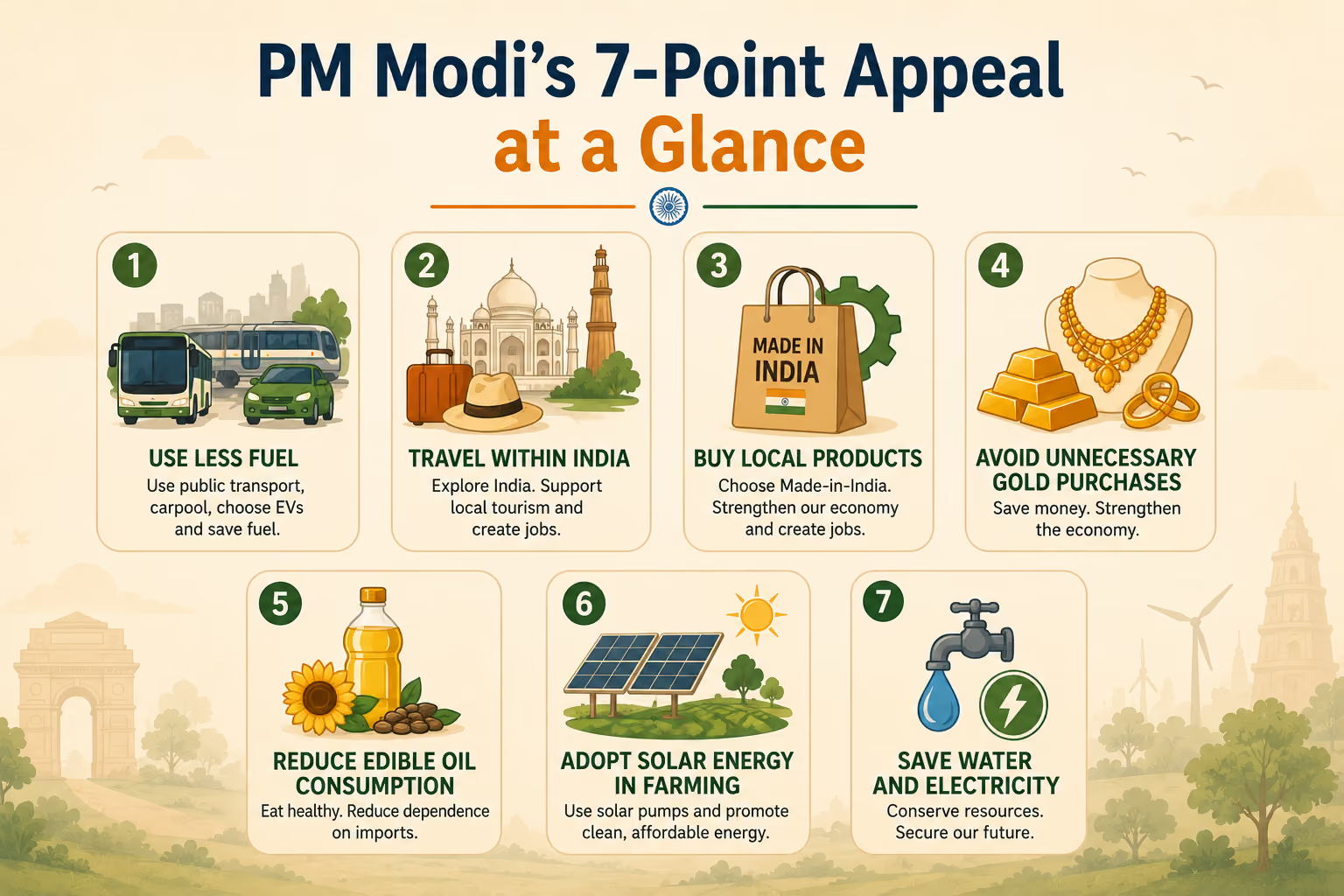
What makes this 7-point appeal important is not any individual suggestion.
It is the broader philosophy underneath it.
The government appears to be signalling three things simultaneously:
Energy shocks, supply disruptions, and geopolitical fragmentation may remain persistent features of the coming decade.
What citizens consume now increasingly affects national resilience.
The idea now extends into:
In reality, it is probably both.
Some of these recommendations are economically rational and environmentally necessary.
Others function more as behavioural nudges designed to psychologically align citizens with the larger “Viksit Bharat” vision.
And that itself is politically significant.
Modern governments increasingly rely not just on policy reforms, but on shaping public behaviour collectively.
The success of this approach, however, depends on one key factor:
Citizens are more likely to embrace sacrifice when they believe:
Because ultimately, responsible consumption cannot be sustained through messaging alone.
It requires trust, infrastructure, incentives, and visible outcomes.
Schedule a call based on your convenience. And get an expert to help you invest.
.png)
The financial life game that makes learning fun!
Let's get in touch
Want the best
investment blog delivered straight to your inbox?
Grow your money without wasting time
on stock picking, poring over excel sheets, financial news, analyzing market trends, tracking the Sensex, researching company fundamentals, comparing mutual funds, reading financial reports, trying to predict the future & losing your sanity!